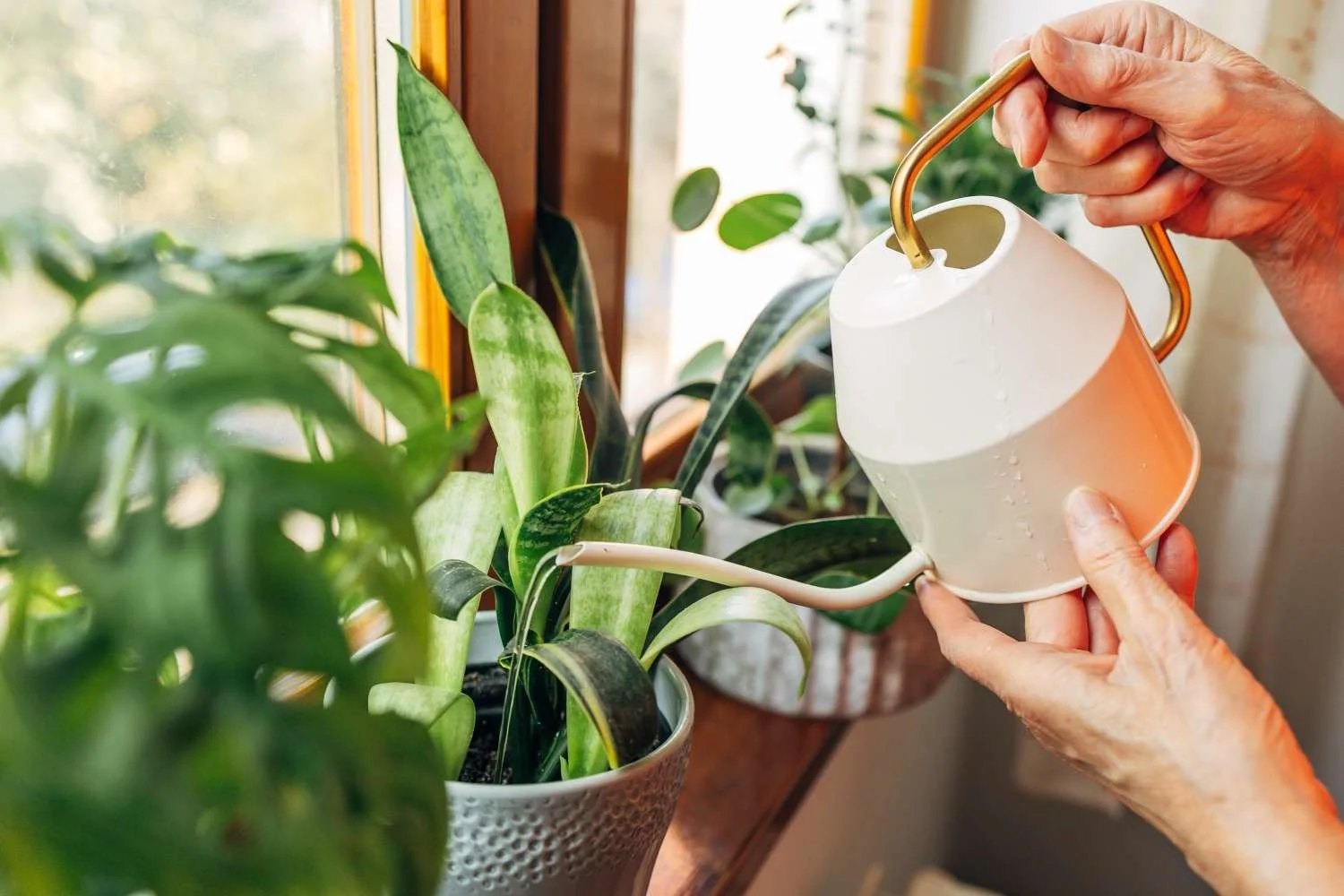
How to Know When Your Plant Actually Needs Water
Watering sounds simple, but it’s probably the most common place houseplant care goes wrong.
The problem usually isn’t that people don’t care for their plants enough. It’s that they care for them on a schedule.
“Water once a week” sounds convenient, but your plant doesn’t have a calendar. How quickly it uses water changes depending on the plant, pot size, soil, light, temperature, humidity, and even the season.
Instead of asking “Is it watering day?”, ask:
“Does my plant actually need water?”
Check the soil first
For most houseplants, the easiest way to decide whether to water is simply to feel the soil.
Push your finger about 1–2 inches into the potting mix.
If the soil still feels noticeably damp, the plant probably doesn’t need water yet. If it feels dry at the depth appropriate for that plant, it may be time to water.
Different plants prefer different levels of dryness.
Tropical plants such as Calatheas and many ferns generally prefer more consistent moisture.
Pothos, Philodendrons, Monsteras and many other common houseplants can usually dry somewhat between waterings.
Snake Plants, ZZ Plants, Hoyas and other drought-tolerant plants generally prefer to dry considerably more before being watered again.
That’s why one universal watering schedule doesn’t work.
Learn the weight of the pot
This is one of our favorite tricks.
Pick up your plant after it has been thoroughly watered and notice how heavy the pot feels.
Check it again several days later.
As the soil dries, the pot becomes noticeably lighter. With a little practice, you can often tell whether a plant needs water simply by picking it up.
This is especially useful for smaller plants in 4" and 6" nursery pots.
Look at the plant, too
Your plant can give you clues.
Depending on the species, a thirsty plant may develop slightly drooping or curling leaves. Some plants become noticeably softer when they're ready for water.
But don't rely on wilting alone.
Drooping can also be caused by overwatering, root problems, temperature stress and other issues. Always check the soil before assuming a droopy plant is thirsty.
When you water, water thoroughly
When your plant is ready for water, give it a proper drink.
Slowly water the soil until excess water begins draining from the bottom of the pot.
Then allow the pot to drain completely.
This encourages water to reach the entire root zone rather than repeatedly wetting only the top inch of soil.
Avoid allowing most houseplants to sit in standing water for extended periods.
Drainage matters
We strongly recommend keeping houseplants in containers with drainage holes whenever possible.
If you love a decorative pot without drainage, you can keep the plant in its nursery pot and place that inside the decorative container.
When it's time to water, remove the nursery pot, water thoroughly, allow it to drain, and return it to the decorative pot.
Simple.
What about a watering schedule?
Schedules can still be useful — just use them as a reminder to check your plants, not an automatic instruction to water them.
For example, checking your plants every Sunday is perfectly reasonable.
Watering every plant every Sunday whether it needs it or not isn't.
The easiest rule to remember
Check first. Water second.
Once you stop watering according to the calendar and start paying attention to the soil, pot weight and individual plant, houseplant care gets much easier.
And remember: every plant is a little different. Check the specific care recommendations for the variety you're growing.
Plants Worth Growing.
Mary Mae Greenhouses